
 K4
K4 K5
K5Best Surf Longboards for Beginners in 2026: Plus the “System Upgrade” That Can Multiply Your Wave Count
Most people searching “best beginner longboard” aren’t chasing style points—they’re chasing more successful takeoffs per hour. And if you’re coming from kayak fishing or SUP, you already understand the real limiter: energy budget.
A better longboard helps. But it doesn’t erase the biggest hidden cost in surf progression:
The Paddle Tax — the time and effort you “pay” just to get into position and match wave speed, before you ever get the reward.
This guide does two things:
-
helps you choose a beginner-friendly longboard that is actually future-proof, and
-
shows a clean upgrade path for riders who want to stop losing sessions to fatigue: Tedgix K4.
Why Longboards Are the Best Choice for Beginner Surfers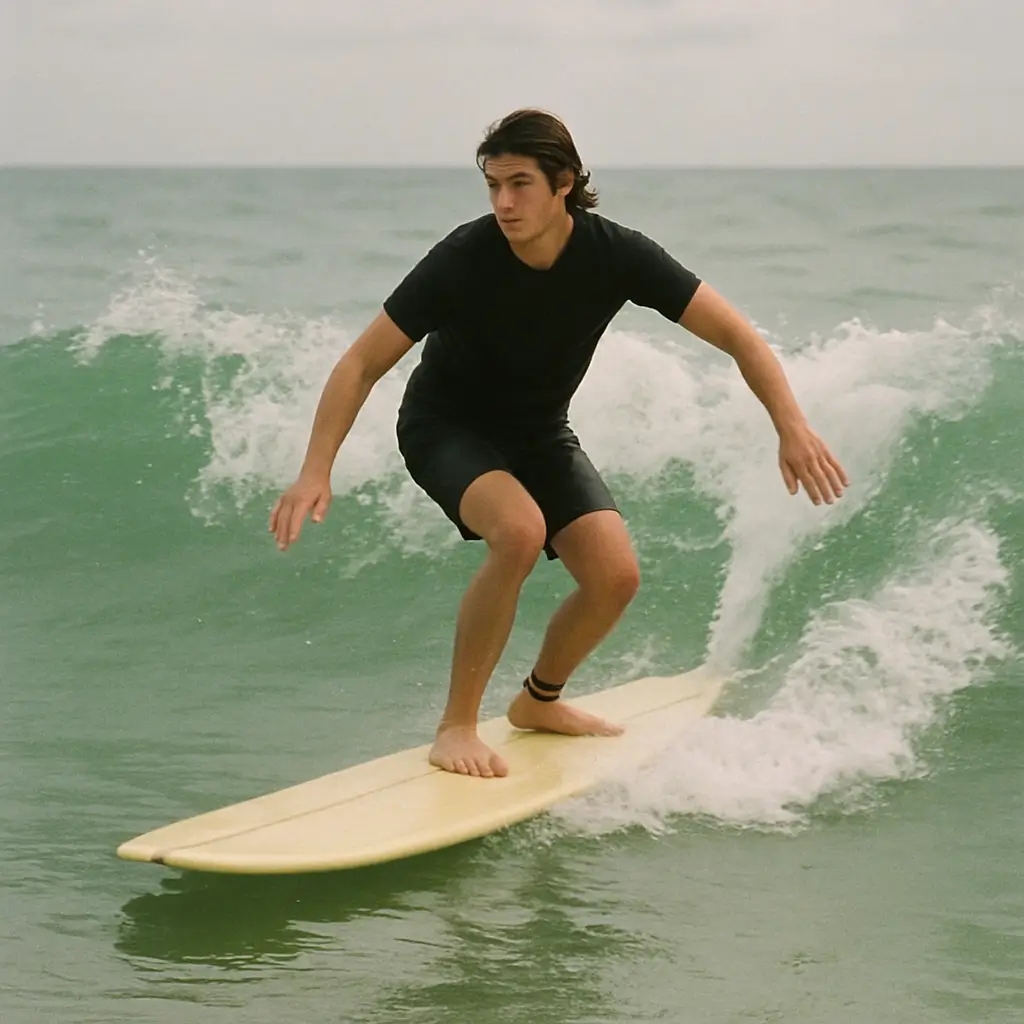
Longboards remain the best entry point in 2026 for one reason: they convert imperfect timing into real waves.
What “beginner-friendly” really means:
-
Earlier entry: more glide, less sprint paddling.
-
Higher tolerance: you don’t need perfect positioning to stand up.
-
More reps: your learning curve is driven by repetition, not theory.
If you’re already a capable paddler (SUP / kayak), you’ll feel this immediately: a longboard increases wave conversion rate—but only up to the point where paddle speed and fatigue become the bottleneck.
Key Features to Look for in Beginner Surf Longboards
Skip the generic checklist. Use features that directly improve wave count and reduce Paddle Tax:
-
Length (8'0–10'0): longer generally improves glide and early entry.
-
Volume (often 60L+): keeps you higher in the water → easier speed maintenance.
-
Outline stability (wider midpoint, fuller nose): fewer micro-corrections while paddling.
-
Durable construction: roof racks, beach carry, travel, repeated sessions.
-
Fin system matters more than you think: your fin box is your expansion slot.
The Importance of the Fin Box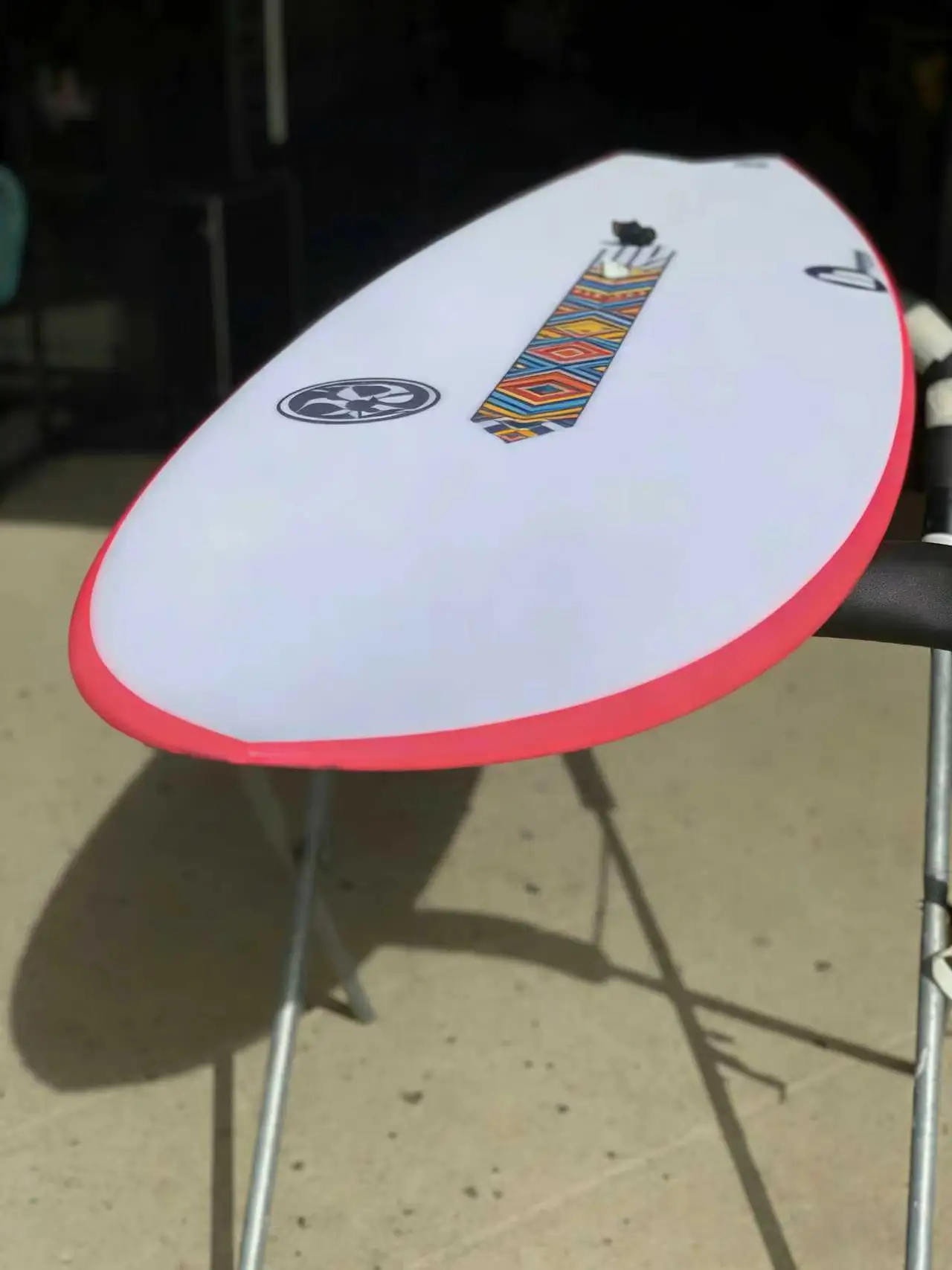
If you ever want to upgrade tracking, efficiency, or add modular propulsion later, Standard US Fin Box is the only realistic “future-proof” choice.
Avoid boards with “click-in” or proprietary fin systems if you plan to upgrade performance. Standard US Fin Box is the only future-proof choice.
Top Surf Longboards for Beginners in 2026 (Reviews & Comparisons)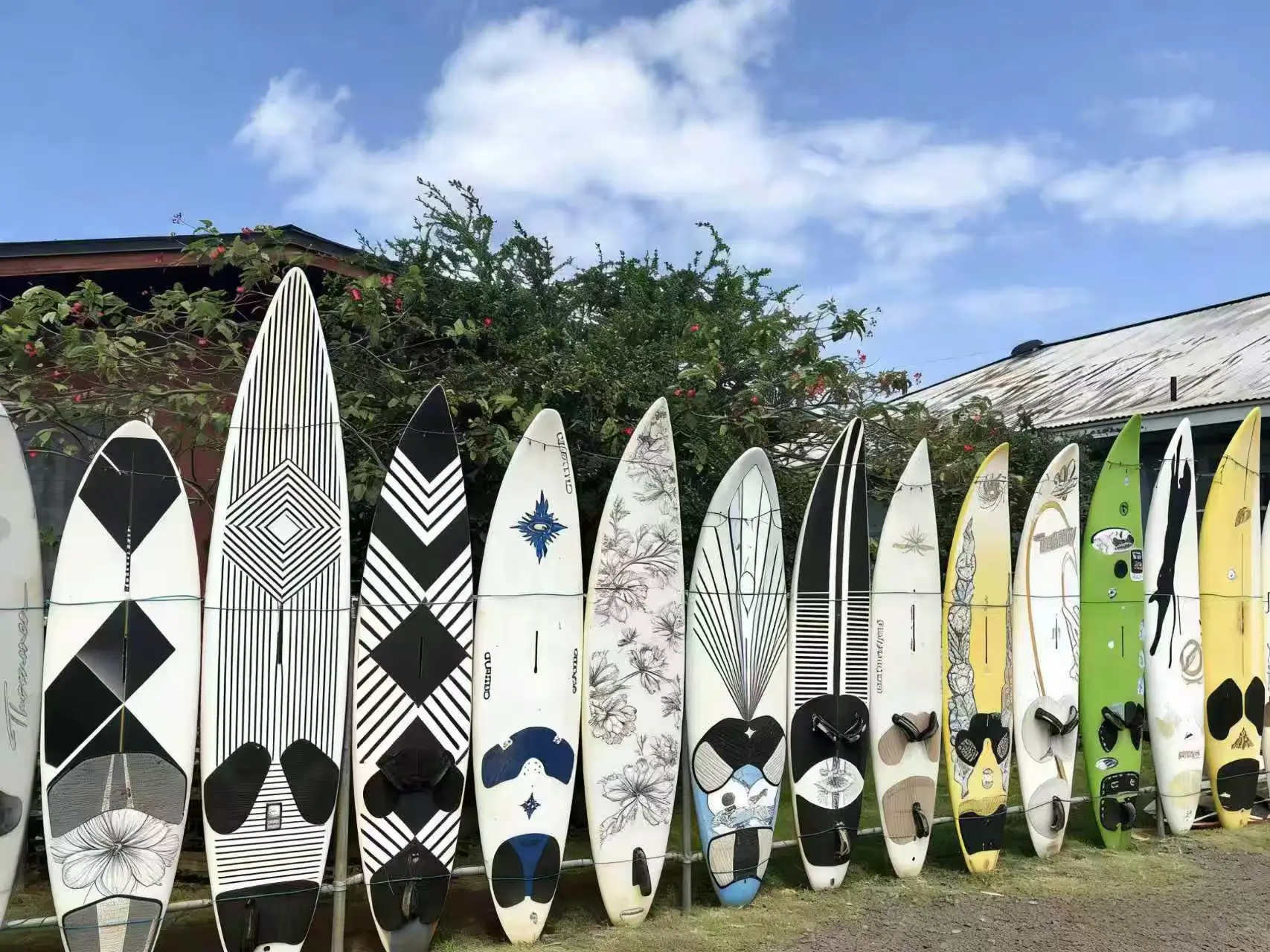
Instead of a padded “Top 10,” here’s a buyer-useful shortlist: board categories that dominate beginner purchases, with the one detail most guides ignore—fin box type.
Quick Comparison Table
| Board Category | Length / Vol (Typical) | Best For | Expansion Slot (Fin Box) | Tedgix K4 Compatible? |
|---|---|---|---|---|
| Performance Log | 9'0–9'6 / 65–85L | Clean trimming, glide | US Fin Box (Standard) | ✅ YES (Slide-in) |
| Epoxy Cruiser | 9'2–10'0 / 75–95L | Max wave count, paddling efficiency | US Fin Box (Standard) | ✅ YES (Recommended) |
| 2+1 Classic Longboard | 9'0–9'8 / 70–90L | Stability + tunable tracking | US Fin Box (Standard) | ✅ YES (Slide-in) |
| Soft-Top (Entry / Budget) | 8'0–9'0 / 55–75L | Shore break, casual sessions | Proprietary / Plastic | ❌ NO (Adapter needed) |
| Click-in / Proprietary Fin System Boards | Varies | Convenience-only setups | Proprietary | ❌ NO (Not future-proof) |
| Surf SUP Longboard | 9'0–11'0 / 110L+ | Early entry, paddle advantage | US Fin Box (Standard) (often) | ✅ YES (Check box spec) |
What to buy
-
Want max reps with minimum fatigue → Epoxy Cruiser or Performance Log with US Fin Box.
-
Want a platform that grows with you → 2+1 Classic Longboard with US Fin Box.
-
Buying a soft-top for price/safety → accept many are not K4-ready, and you’re limiting future upgrades.
How to Choose the Right Longboard for Your Needs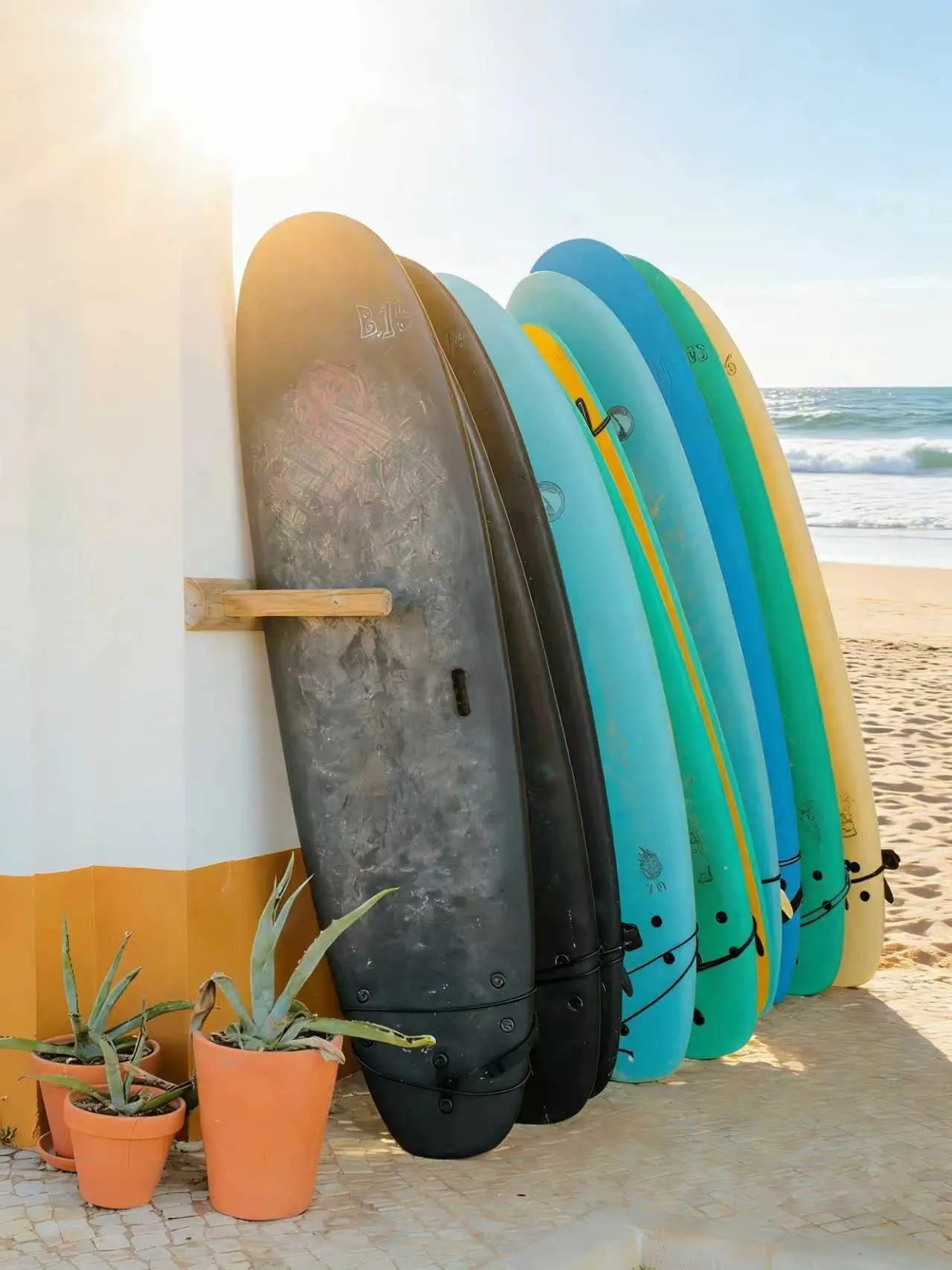
If you already have paddle experience, choose like an operator: optimize the system, not the vibe.
-
If your sessions end with “I can’t paddle into anything anymore” → your limiter is fatigue, not board shape.
-
If you can consistently get in, but want better trim/lines → then board refinement matters more.
The Fatigue Calculation
Before you buy, ask yourself: Is your limitation the board’s outline—or your shoulder stamina?
A 10% volume increase might give marginal efficiency.
But if fatigue is the bottleneck, upgrading propulsion changes the category of outcome—because it reduces the Paddle Tax, not just the difficulty.
Decision rule:
If you’re missing waves because you can’t hold paddle speed, you don’t need a “slightly better board.” You need an efficiency upgrade.
Why Even the Best Board Can’t Fix “Paddling Fatigue”
Here’s the uncomfortable truth: longboards are forgiving, but they’re still passive equipment. They don’t generate speed—you do.
That’s why “beginner board upgrades” often plateau:
-
You buy a bigger board → you get early entry.
-
Then fatigue hits → paddle speed drops → your conversion rate collapses anyway.
This is the classic beginner pattern:
-
50% time paddling
-
10% time actually surfing
-
the rest waiting / repositioning / recovering
If your goal is more surfing (not more workouts), the win condition is simple:
Eliminate the Paddle Tax.
Solved: The “Paddle Speed” Bottleneck
This is the point where the article stops being just a shopping list and becomes a system design.
From Passive to Active: The Logic of Modular Propulsion
Traditional “solution” to missed waves is: bigger board, more volume.
But when fatigue is the limiter, volume becomes a blunt tool.
A better approach is active assistance:
-
Keep speed when you’re tired
-
Hold position with less correction
-
Spend more of your session on wave decisions and takeoff quality
Where Tedgix K4 Fits
If your board has a Standard US Fin Box, you have a real expansion slot. That’s exactly where Tedgix K4 belongs: as a modular propulsion upgrade—not a gimmick.
Tedgix K4 — the points that matter in this context:
-
Auto-Steering: reduces drift and correction, so more effort becomes forward speed.
-
Slide-in installation: slides into compatible fin boxes (no drilling, no permanent mod).
-
2-in-1: fin + propulsion module—built for practical, repeatable sessions.
-
~1kg class hardware: realistic for riders who already carry gear and want a clean setup.
-
Reverse charging (PD3.1): useful if you treat your kit like a system, not a single-use toy.
The framing is simple: don’t think “less fatigue.” Think eliminate the Paddle Tax when paddle speed is the bottleneck.
Safety & Etiquette: Using a Motor in the Surf
If you run any assisted propulsion in surf, treat it like you’d treat a boat lane: respect people, space, and local rules.
Practical guidelines:
-
Use assisted propulsion in lower-density areas and avoid crowded peaks.
-
Keep speed conservative near others; prioritize predictability.
-
Check local regulations and spot norms; when in doubt, don’t force it.
-
Make sure your setup is secure, and you can stop/exit cleanly.
A responsible setup builds trust—and keeps the session smooth for everyone.
The Economics of Wave Count
Commercial intent users aren’t here for motivation. They’re here for ROI.
Wave Count is the real ROI
If your limiting factor is fatigue, the economics get simple:
-
Buy a board that’s “better,” but still miss waves due to fatigue → low output.
-
Build a system (board + upgrade path) → higher output.
A clean way to think:
-
Lower Paddle Tax = more attempts
-
More attempts = faster progression
-
Faster progression = better value per session
The board is step one. The system is the multiplier.
Paddling Fatigue Recovery: Tips and Tools
If you surf + SUP/kayak, your problem is rarely “no fitness.” It’s cumulative load.
High-impact levers:
-
Prioritize tracking + glide (equipment) to reduce wasted strokes.
-
Structure sessions: shorter, higher-quality reps beat long grind sessions.
-
Recovery basics: hydration, shoulder mobility, and sleep are unglamorous but decisive.
If you consistently fade late-session, that’s a system constraint—not a character flaw.
Longboard Surfing Tips for Beginners: Catch More Waves, Faster
For experienced paddlers, the biggest gains come from efficiency, not effort:
-
Get into position earlier (avoid last-second sprint paddling).
-
Choose lines that preserve glide.
-
Avoid constant correction—better tracking equals better energy retention.
Common Mistakes Beginners Make (and How to Avoid Them)
-
Buying a board with a proprietary fin system and accidentally locking out upgrades.
-
Treating “more volume” as the only solution to fatigue.
-
Ignoring the true limiter: paddle speed under fatigue, not paddling “ability.”
If you want a future-proof purchase, US Fin Box is non-negotiable.
Innovations in Surfboard Technology for 2026
Most useful trends for beginners:
-
more durable lightweight constructions,
-
modular fin ecosystems,
-
shapes that retain speed in weaker surf.
Modularity is rising—which makes your fin box choice even more important.
How to Care for and Maintain Your Longboard
-
Rinse after use, especially around fin boxes and hardware.
-
Inspect the fin box regularly (cracks, looseness, sand).
-
Repair small dings early—water ingress kills boards quietly.
Frequently Asked Questions About Beginner Longboards
Do I really need to care about fin box type?
Yes. If you want upgrades later, Standard US Fin Box is the cleanest path.
Soft-top vs epoxy for a gear-heavy lifestyle (SUP/kayak folks)?
Soft-tops are convenient; epoxy cruisers often win on glide and longevity. Choose based on session frequency and how hard you are on gear.
When does Tedgix K4 make sense?
When fatigue is reliably limiting your paddle speed and wave conversion—especially late-session.
Conclusion: Don’t Just Buy a Board. Build a System.
If you want the best “beginner” longboard in 2026, the answer is not one magic model. It’s a two-step system:
-
Buy a board with a Standard US Fin Box (future-proof expansion slot).
-
Add Tedgix K4 when you’re ready to eliminate the Paddle Tax and convert more waves with less fatigue—thanks to Auto-Steering and Slide-in installation.