
 K4
K4 K5
K53 Best Trolling Motors for SUPs & Inflatable Kayaks in 2026 (No Drilling Required)
The “Heavy Motor” Trap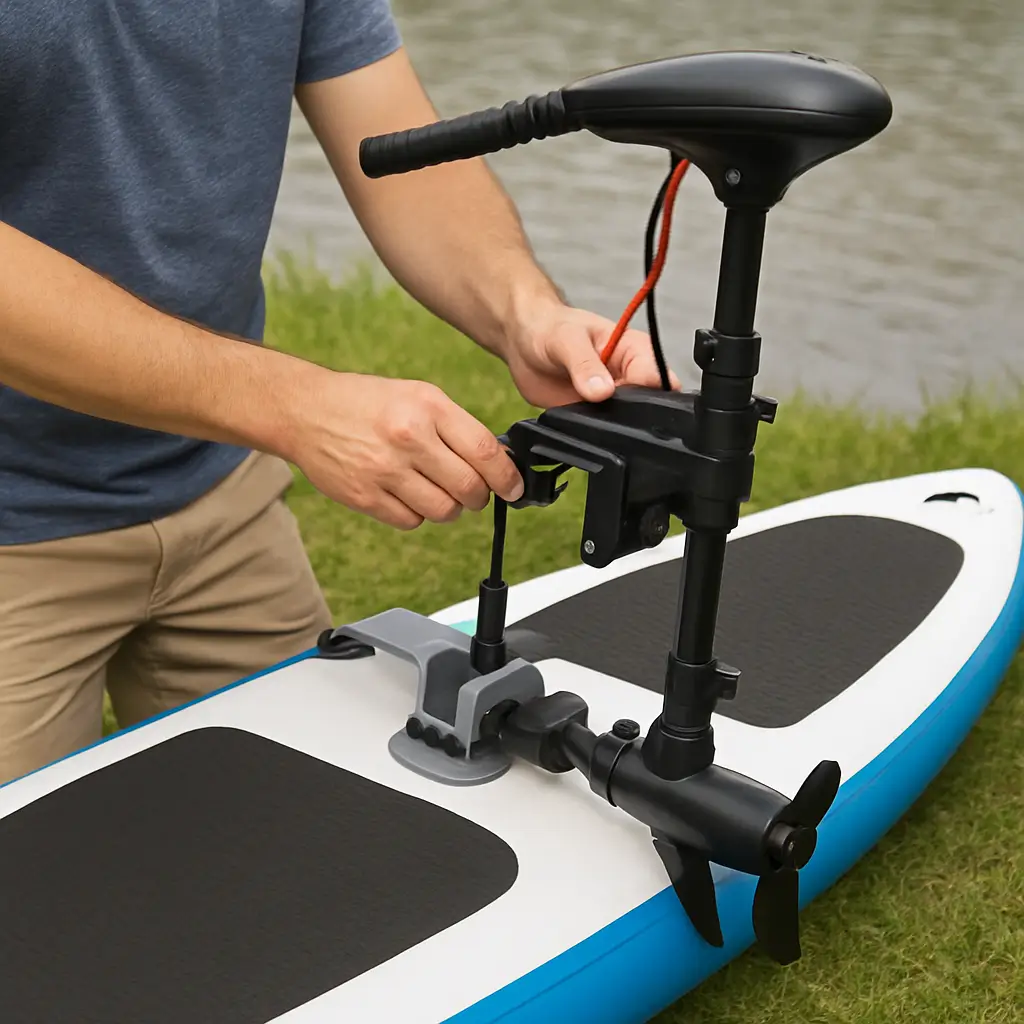
Most trolling motors were engineered for bass boats — not for 20-lb inflatable kayaks or wind-sensitive SUP boards.
Mounting a traditional 30–55 lb thrust transom motor on an inflatable often creates more problems than it solves:
-
Excess stern weight
-
Hull flex under load
-
Drag that cancels out real-world efficiency
-
A 40–60 lb total system once you include brackets and a lead-acid battery
On rigid hull boats, that compromise may be acceptable. On SUPs and inflatables, it destroys balance and range.
In 2026, “best” no longer means maximum thrust.
It means:
Power-to-weight efficiency + zero-compromise installation.
3 Critical Factors Before Buying (Don’t Ignore These)
System Weight vs. Motor Weight
Many brands advertise motor weight.
Serious paddlers calculate total system weight.
A typical 12V setup:
-
Motor: 18–25 lbs
-
Transom mount: 5–10 lbs
-
Lead-acid battery: 20–35 lbs
Total: 45–60+ lbs
On an inflatable or SUP, that’s not propulsion — that’s ballast.
For wind-sensitive platforms, a total system weight under 10 lbs dramatically improves tracking, glide efficiency, and battery runtime.
This is where integrated lithium systems outperform traditional architecture.
Mounting: Transom vs. US Fin Box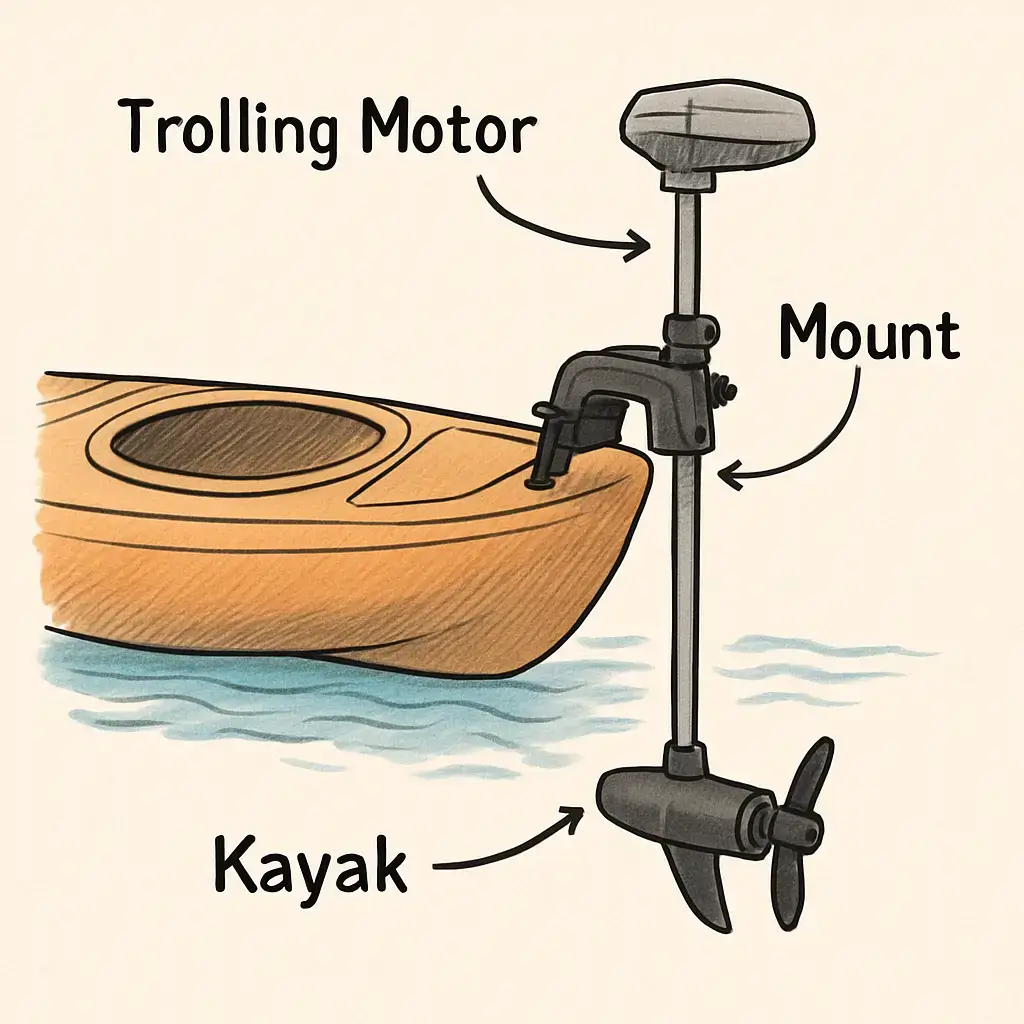
Inflatable kayak owners face a mounting dilemma:
-
Glue on a PVC transom plate
-
Drill into reinforcement panels
-
Accept permanent modification
Or use what already exists.
Most SUPs and many inflatable kayaks come with a standard US Fin Box. Leveraging that interface eliminates:
-
Glue
-
Brackets
-
Structural compromise
Fin-box integration is currently the only truly zero-damage propulsion mounting method for inflatable platforms.
Control Mechanics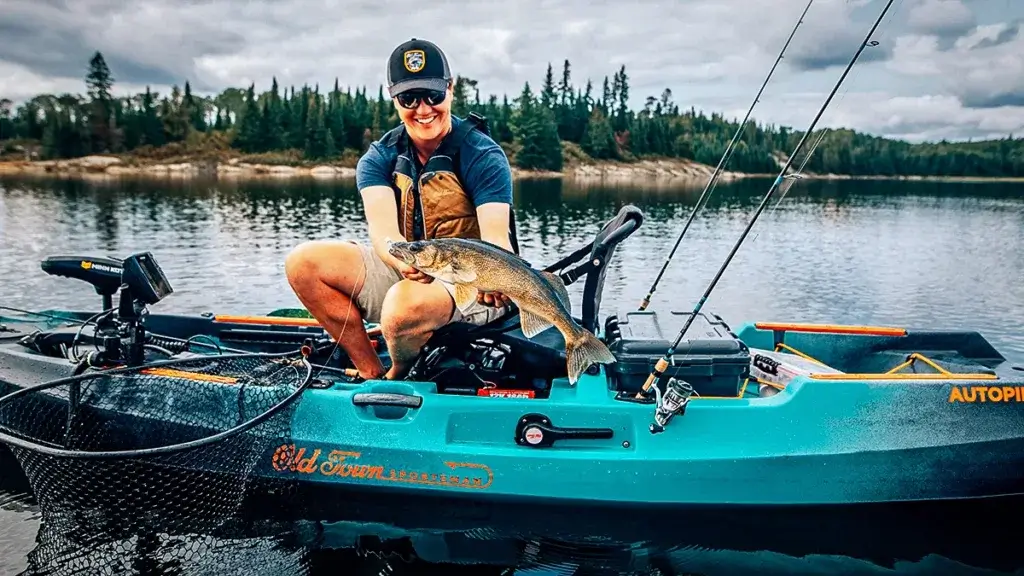
Tiller-handle control makes sense on aluminum boats.
On a SUP, reaching behind you to adjust throttle:
-
Shifts body weight
-
Disrupts stance
-
Reduces fishing efficiency
-
Increases instability in crosswind
For anglers managing rods and gear, propulsion should not require constant manual correction.
Stability and tracking matter more than top speed.
Top Picks for 2026
Best Overall (Lightweight & Smart): Tedgix K4 Electric Fin
If your platform is a SUP or inflatable kayak, the Tedgix K4 sets the benchmark.
It is not a traditional trolling motor with a bracket.
It is a 5 kg total propulsion system engineered around portability and fin-box integration.
Why It Leads in 2026
-
Slide-in installation through a standard US Fin Box (no drilling, no glue)
-
Integrated lithium power module (no exposed wiring)
-
Auto-Steering for wind correction on SUP platforms
-
Wrist remote control
-
2-in-1 capability (detachable propulsion unit for auxiliary use)
Unlike bracket-mounted motors, the K4 becomes part of the board’s hydrodynamic profile. There is no external clamp, no drag-heavy transom plate.
For SUP anglers fighting crosswinds, Auto-Steering is the differentiator.
Instead of constantly correcting drift, the system stabilizes tracking automatically — reducing fatigue and improving lure presentation.
Key Specs
-
5 kg total system weight
-
Up to 3 hours runtime
-
Slide-in installation (no drilling)
-
Remote wrist control
-
Integrated lithium system (no lead-acid required)
For inflatable platforms, this architecture aligns directly with modern portability demands.
Best for Heavy Duty: Newport Vessels NK180 (Transom Mount)
For rigid-hull kayaks with reinforced transoms, the Newport NK180 provides substantial thrust.
It is well suited for:
-
Heavier PVC inflatables with factory transom boards
-
Towing applications
-
Gear-heavy setups
However, the trade-off includes:
-
External battery requirements
-
Clamp-based installation
-
Higher total system weight
It remains a capable option when power output outweighs portability concerns.
Note: On a standard SUP, high thrust can cause the nose to lift aggressively (porpoising), making steering difficult.
Best for Minimalists: Bixpy J-2
The Bixpy J-2 targets paddlers prioritizing compactness.
It offers:
-
Lightweight profile
-
Modular battery
-
Fin-based integration options
However, compared to the Tedgix K4, it lacks:
-
Integrated Auto-Steering
-
Advanced tracking stability
-
Broader multi-use capability
For paddlers who simply want propulsion assistance, it remains viable.
Without Auto-Steering, you are the autopilot. On a lightweight SUP, even a mild crosswind will spin the bow, forcing you to stop fishing and correct your course with a paddle every few minutes.
Installation Showdown: 5 Minutes vs. 45 Minutes
Let’s compare real-world setup time.
Traditional Transom Setup
-
Assemble bracket
-
Attach clamp
-
Secure battery
-
Run power cables
-
Test throttle
Typical time: 30–45 minutes
Fin-Based Integrated System (Tedgix K4)
-
Slide into US Fin Box
-
Lock in place
-
Power on
Typical time: Under 5 minutes
The difference is not convenience alone.
It is transport efficiency, storage simplicity, and resale preservation.
Note: Traditional motors look cheaper upfront, but once you add a reliable lithium battery and a mounting bracket, the total cost often exceeds the all-in-one Tedgix K4.
Conclusion: Which One Fits Your Hull?
For hard-shell boats with reinforced sterns and heavy loads, transom systems still have a place.
For SUPs and inflatable kayaks, the criteria have changed.
What matters in 2026:
-
Low total system weight
-
Zero permanent modification
-
Stability in wind
-
Portable lithium power
If your goal is effortless propulsion that feels as natural as carrying your paddle, the Tedgix K4 aligns with modern inflatable and SUP design philosophy.
If you prioritize maximum thrust over portability, traditional systems remain available.
Before deciding, confirm whether your board includes a US Fin Box — that interface determines whether you can eliminate drilling entirely.
Portability is no longer optional.
For inflatable platforms, it is the standard.